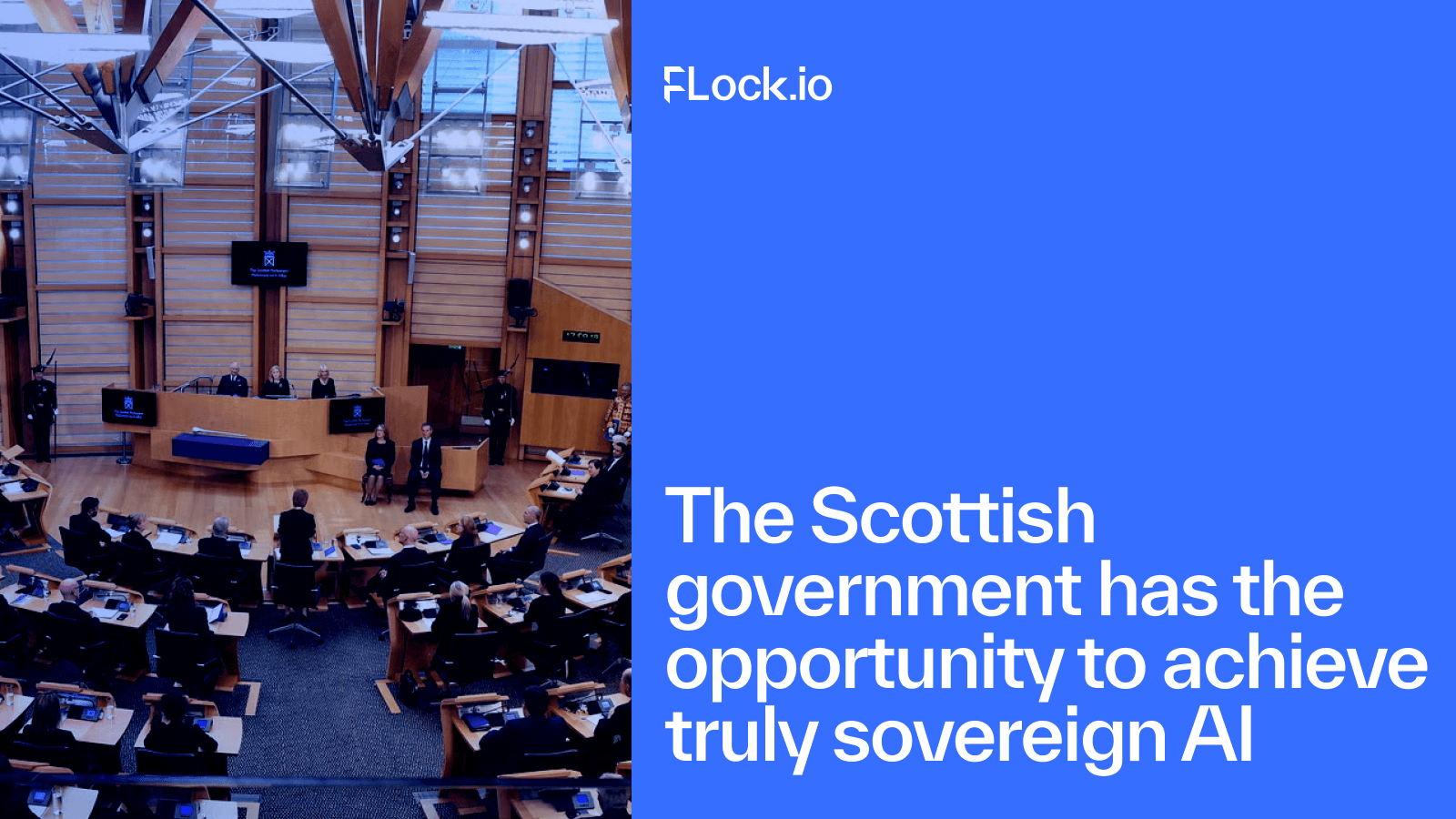
Earlier this month, Scotland headed to the polls. The SNP has won a fifth successive Scottish Parliament election and are expected to return for a fifth term in 2029. With electoral success in sight, Holyrood is now setting its eyes on the future of AI in Scotland, the strategy of which differs from the rest of the UK. From afar, Scotland has watched England’s decisions come under intense scrutiny. This has given Scotland the gift of foresight to not repeat the same mistakes.
On March 20 this year, the government published Scotland’s Artificial Intelligence Strategy 2026–2031: a five-year plan designed to foster responsible and inclusive growth across the Scottish economy, emphasising legal tech, healthcare and renewable energy. Projections suggest AI could contribute £23 billion to Scotland’s GDP by 2035.
Setting Scotland’s approach apart is its aim to make Scotland a leader in trustworthy, ethical and inclusive AI deployment. There is a clear understanding that AI adoption will only scale if people trust the systems being built. That positions Scotland well in a global landscape where public scepticism around AI is growing.
AI is rapidly becoming the backbone of modern economics. AI is reshaping how governments operate, how industries compete and how citizens interact with public services. The next government will inherit not just a strategy but responsibility for building an AI-enabled state.
However, governments face a challenge: how do you execute reliable, secure high-performing AI systems at scale that respect the stringent privacy requirements inherent to the public sector?
[ 👋 Hi there! If you’re here to find out more about FLock.io, follow us on X, read our docs, sign up to AI Arena on train.flock.io and email us at hello@flock.io. We just launched FOMO, completing our full-cycle decentralised AI platform.]
Scotland’s AI strategy prioritises public trust more than the rest of the UK
Devolved powers give the Scottish Government authority over areas like education, healthcare and AI. While the UK handles technology and data laws, Scotland has full autonomy in deciding how it adopts and funds AI in its public services and regional economy. It has the freedom to shape its own local outcomes in a way that serves Scottish people.
The key difference between England’s and Scotland’s AI strategies is that the former focuses on less regulation to boost commercial tech, whereas the latter builds on the EU AI Act’s principles to prioritise a rights-based, ethical model that establishes public trust.
Scotland made global history by becoming the first part of the UK (and one of the first regions globally) to mandate that all public sector bodies register their AI projects on a publicly accessible database for transparency. This wildly differs from the UK, which was exposed in a Nerve investigation to have previously undisclosed contracts with Palantir that were not on the government’s official contract finder website.
In sharp contrast with NHS England and the UK Ministry of Defence using Palantir, Scotland explicitly excludes the controversial tech giant’s software across any of its public sector. The SNP explicitly rejects the use of Palantir in NHS Scotland, maintaining that they will never hand over Scots’ sensitive medical records to the US private company.
Scotland has the opportunity to choose truly sovereign AI through federated learning
Sovereign AI is when a region controls its own systems, prioritising local data security and infrastructure, cultural values and regulatory compliance, with less reliance on foreign tech giants. Governments globally are planning their next steps towards this instead of sending data to servers owned by the traditional, centralised corporations that have dominated in recent years.
Federated learning has emerged as the answer to the public sector’s data security concerns about AI. Instead of collecting vast amounts of sensitive data into a single, central location, federated learning lets multiple entities collaboratively train a model by bringing the training process directly to the data. Then it only collects the updates, not the raw data.
For example, FLock.io is currently building sovereign AI for Sarawak, the largest state in Malaysia. It follows a successful proof-of-concept in which FLock.io was the first in the world to use federated learning to train and fine-tune a language model on indigenous languages.
This is more than a local success story; it’s a blueprint for the future of global governance. As nations grapple with the dual pressures of adopting cutting-edge AI and protecting citizen privacy and state secrets, the centralised AI is becoming a geopolitical and regulatory risk. Federated learning’s application in Sarawak is only the beginning of governments opting for a more GDPR-compliant alternative to traditional ML.
Using Scottish public sector data isn’t straightforward
Public sector data is often fragmented across departments, inconsistent in format, and constrained by privacy and regulatory requirements. Even when access is possible, transforming that data into something that can be used to train reliable models is a complex and resource-intensive process.
In practice, this is where many AI initiatives stall. The assumption that more data automatically leads to better models simply does not hold. The real bottleneck is not access to data, but the ability to turn that data into high-quality, reliable training inputs.
This challenge is FLock.io’s specialism
What we have found is that attempting to move directly from raw data to model training introduces significant instability. Noise, inconsistency, and bias within datasets all degrade performance, particularly in complex or sensitive environments like public services.
Instead, we explored a different approach – one that treats data not as something to be passively consumed, but as something that can be actively constructed, refined, and validated through algorithmic processes.
The results are both counterintuitive and encouraging. Models trained on algorithmically generated and validated data can outperform those trained directly on raw datasets. Reliability improves, outputs become more consistent, and systems behave more predictably under real-world conditions.
This is not about replacing real data entirely. It is about recognising that better data, not more data, is what drives better AI.
What the Scottish government needs
To truly deliver on the principles outlined in its AI strategy, Scotland needs systems that are not only powerful, but also transparent, adaptable, and aligned with national priorities. That requires infrastructure that can operate within constraints, particularly around privacy, while still delivering high-quality outcomes. That means finding ways to deploy AI systems that can operate across departments without requiring sensitive data to be centralised.
It also means rethinking some of the assumptions that have shaped the first wave of AI development. In particular, the idea that centralised models trained on vast amounts of raw data are the only viable path forward.
Elections create moments of reset. They allow governments to define priorities, establish partnerships, and set the tone for the years ahead. For Scotland, this election arrives at a time when AI is moving from experimentation to deployment. The window for shaping how these systems are built, and who benefits from them, is still open. But it will not remain open indefinitely.
There is an opportunity here for Scotland to take a distinctive path. Not by competing on scale with global tech giants, but by leading in areas that will define the next phase of AI adoption: trust, reliability, and sovereignty.
That means building AI that:
- Reflects local needs
- Operates within local constraints
- Delivers benefits that are broadly shared
Because in the end, the defining question is not whether Scotland adopts AI. It is whether Scotland owns the intelligence it relies on.